Commercial Carpet Cleaning in Ottawa: How to Schedule Cleaning Around Business Hours
Scheduling commercial carpet cleaning is mostly about timing.
You want the carpet cleaned when the building is quiet, but you also need enough time for the carpet to dry before normal foot traffic resumes.
For many Ottawa offices, that makes Friday evening a convenient option. A business that operates seven days a week may need to clean one area at a time instead. Rental properties are different again, since cleaning often needs to fit between tenant turnover, repairs, painting, and the next move-in date.
This guide explains how to plan commercial carpet cleaning around business hours, what affects drying time, how often different areas may need professional cleaning, and what to consider when cleaning rental properties.
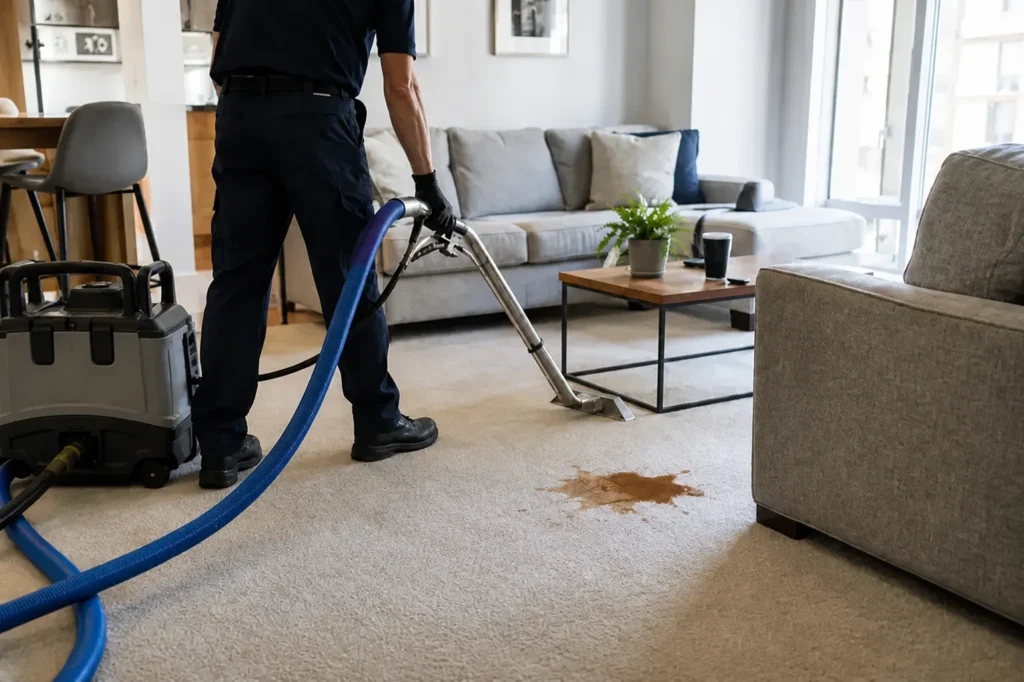
When Should an Office Have Its Carpets Cleaned?
The best cleaning time depends on how the building operates.
For a typical office that closes Friday afternoon, an evening or weekend cleaning may provide enough time for the carpet to dry before employees return. Other businesses may need a different approach.
Common options include:
- Friday evening: A practical choice for offices that close for the weekend.
- Saturday or Sunday: Useful when the building is mostly empty and longer drying time is available.
- Weekday evenings: Suitable for offices that need to be ready again the next morning.
- Early mornings: Can work for smaller areas or businesses with late opening times.
- Section-by-section cleaning: Useful for offices, clinics, retail locations, and other facilities that cannot close completely.
Before scheduling, confirm:
- when employees and customers leave
- when the building can be accessed
- whether elevators or loading areas need to be reserved
- whether building security needs advance notice
- what the HVAC system will be doing during and after cleaning
- whether furniture will be moved
- whether the entire floor or only selected areas need cleaning
A simple example is an office that closes at 5 p.m. Friday and reopens at 7 a.m. Monday. If the carpet, cleaning method, ventilation, and building access are suitable, that window may provide plenty of time for the work and drying process.
How Long Does Commercial Carpet Take to Dry?
There is no reliable single drying time for every commercial carpet.
Drying depends on several factors, including:
- carpet fibre and construction
- carpet backing
- how heavily soiled the carpet is
- cleaning method
- amount of moisture applied
- effectiveness of extraction
- temperature and humidity
- ventilation and air movement
- number of cleaning passes
- condition of the carpet
This is why a professional cleaner should be cautious about promising that every carpet will be dry within a specific number of hours.
Air movement can help reduce drying time. Carpet manufacturers may also provide specific maintenance requirements for their products. For example, Interface’s carpet-tile guidance discusses both low-moisture maintenance and periodic hot-water extraction, while emphasizing the importance of following approved methods and controlling residual moisture.
The practical question is not simply, “How many hours will it take?”
It is:
When will this particular carpet be suitable for normal use again?
If a business needs the area back by Monday morning, that requirement should be discussed before the cleaning method is selected.
Why Friday Night Cleaning Can Work Well for Offices
Friday evening cleaning can be a good fit when a business has a relatively quiet weekend.
A typical schedule might look like this:
Friday afternoon: Employees clear small items from the floor.
Friday evening: The cleaning crew arrives after the office closes.
Friday night: Carpet cleaning is completed and airflow is arranged where appropriate.
Saturday and Sunday: The carpet has time to dry while the office is largely unoccupied.
Monday morning: Staff return to a clean workspace.
This approach is not suitable for every building. Restricted HVAC operation, poor ventilation, difficult access, heavy furniture, or carpets that require more extensive cleaning can change the schedule.
The cleaning plan should be based on the actual site rather than assuming every Friday-night job will have the same drying time.
Low-Moisture Cleaning or Hot-Water Extraction?
Commercial carpet can be maintained using different cleaning systems.
Hot-water extraction uses a cleaning solution and water to loosen soil, followed by extraction of the solution and suspended soil. It is commonly used for periodic or restorative cleaning.
Low-moisture methods use substantially less liquid and can be useful when a business needs faster access to the area, depending on the carpet and maintenance requirements.
Neither method is automatically the right choice for every carpet.
The decision should consider:
- carpet construction
- level and type of soil
- existing maintenance program
- manufacturer requirements
- available cleaning window
- drying conditions
- condition of the carpet
The Carpet and Rug Institute’s commercial cleaning standards are designed specifically around commercial carpet maintenance and cleaning procedures.
For a specific carpet, manufacturer instructions should take priority. Using an inappropriate method, chemical, or piece of equipment can damage some carpet products or affect warranty requirements. Interface, for example, provides specific maintenance procedures for its carpet-tile products.
Carpet Tile and Broadloom Carpet Are Not Necessarily Maintained the Same Way
Commercial carpet generally falls into two broad categories: carpet tile and broadloom carpet.
Carpet tile is installed in individual modular pieces. Broadloom is installed in larger continuous sections.
That difference can affect maintenance and repair.
With carpet tile, individual damaged or heavily stained tiles may sometimes be replaced rather than treating the entire floor. However, the appropriate cleaning products, equipment, and procedures still depend on the specific manufacturer’s requirements.
If the carpet is modular tile, identify the manufacturer and product before choosing a cleaning system.
How Often Should an Office Have Its Carpet Cleaned?
There is no universal schedule that applies to every office.
As a starting point, many commercial facilities can plan periodic professional cleaning at least once or twice a year, while high-traffic areas may need more frequent attention. The Carpet and Rug Institute recommends regular vacuuming, interim maintenance for traffic areas, and periodic deep cleaning as part of a broader commercial carpet maintenance program.
The right schedule depends on:
- number of employees
- visitor traffic
- entrance traffic
- food and beverage use
- carpet colour and appearance standards
- outdoor soil brought into the building
- winter salt and moisture
- quality of daily vacuuming
- condition of entrance mats
- type of carpet
Instead of waiting for the entire office to look dirty, pay attention to specific warning signs:
- dark traffic lanes
- visible soil around entrances
- recurring stains
- salt residue
- areas that remain dull despite regular vacuuming
- noticeable odours
- carpet that is becoming difficult to maintain
A useful maintenance plan may involve more frequent cleaning in high-use areas and less frequent cleaning in private offices or lightly used spaces.
Ottawa Winter Traffic Can Put Additional Pressure on Commercial Carpet
Ottawa’s long winter season can introduce snow, moisture, salt, and outdoor soil into commercial buildings.
The entrance usually takes the most abuse, followed by corridors and other high-traffic areas.
Good winter carpet maintenance starts before professional cleaning. Effective entrance matting and regular vacuuming can reduce the amount of soil and moisture reaching the carpet.
During winter, pay particular attention to:
- entrance mats
- lobby carpet
- corridors
- high-traffic walkways
- visible salt residue
- wet areas near entrances
After winter, a building manager can inspect the carpet for traffic lanes, embedded soil, staining, and areas that need restorative cleaning.
Commercial Carpet Cleaning During a Rental Turnover
Rental turnover creates a different scheduling problem.
The goal is usually to clean after the major dusty work is finished but early enough to allow the carpet to dry before the next tenant moves in.
A practical sequence is:
- Previous tenant moves out.
- Unit is inspected.
- Repairs and painting are completed.
- Dust and construction debris are removed.
- Carpet is professionally cleaned.
- Carpet is given adequate time to dry.
- Final inspection is completed.
- New tenant moves in.
Cleaning too early can mean the carpet becomes dirty again during repairs or painting. Cleaning too late can leave insufficient time for drying before occupancy.
For occupied rental units, access requirements also matter. Under Ontario’s Residential Tenancies Act, landlords generally need to provide at least 24 hours’ written notice for permitted entries that require notice, with specific exceptions. The notice must identify the reason, date, and a time between 8 a.m. and 8 p.m. The Act also contains a specific exception for regular housekeeping where the tenancy agreement requires the landlord to provide cleaning at regular intervals.
Because the legal requirements depend on the reason for entry and the circumstances of the tenancy, landlords and property managers should confirm the applicable requirements rather than treating every carpet-cleaning visit as identical.
When Carpet Cleaning Is Not Enough
Professional cleaning can remove soil and many stains, but it cannot reverse every type of carpet damage.
Replacement or repair may make more sense when the carpet has:
- severe wear
- damaged backing
- delamination
- permanent discoloration
- extensive water damage
- persistent odours caused by an underlying problem
- damage that cleaning cannot reasonably correct
In some cases, cleaning an old or structurally damaged carpet may improve its appearance temporarily without addressing the underlying problem.
A good assessment should distinguish between dirty carpet and damaged carpet.
What Should Employees Do Before the Cleaner Arrives?
Good preparation can make commercial cleaning faster and more effective.
Employees should, where practical:
- remove boxes and loose items from the floor
- organize cables and small equipment
- secure paperwork and sensitive documents
- move small personal items
- identify stains or problem areas
- tell the cleaning company which furniture will remain in place
Heavy desks, filing cabinets, equipment, and other large items should be discussed before the appointment.
The cleaning company should also know about access restrictions, elevator requirements, loading areas, alarm procedures, and any areas that cannot be entered.
What About Rental Units?
The same basic preparation applies to rental properties.
Before carpet cleaning:
- remove loose belongings
- make sure the cleaner can access the unit
- identify stains or odours
- identify furniture that will remain
- complete repairs and dusty work first when possible
- allow enough time for the carpet to dry before move-in
For property managers handling multiple units, scheduling several turnovers together can also make the cleaning process more efficient.
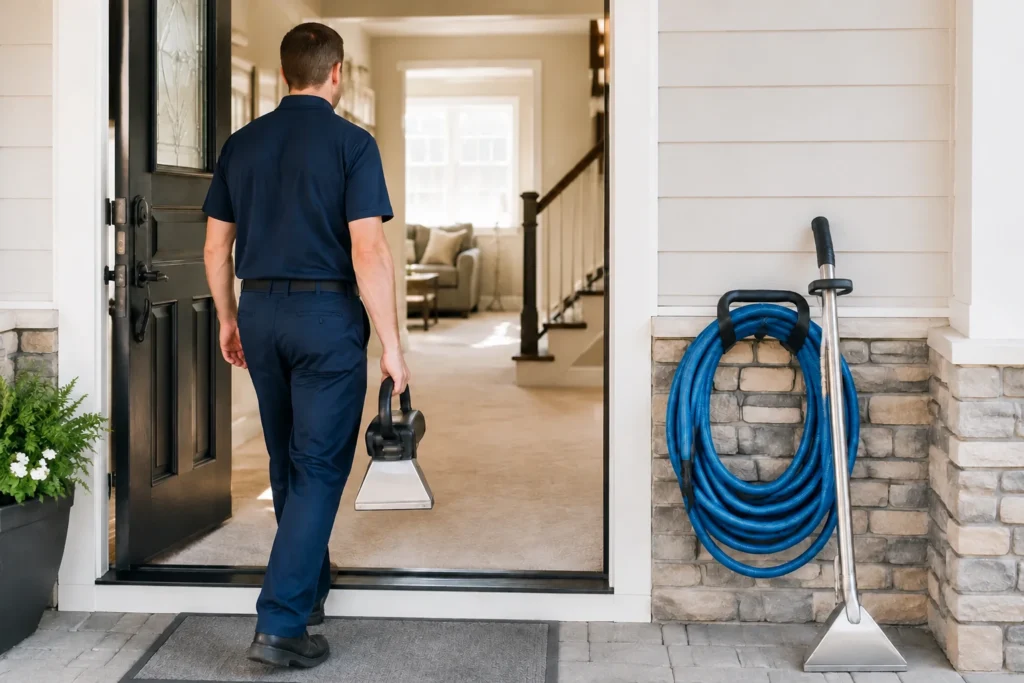
What Should a Commercial Cleaner Ask You?
A useful commercial carpet-cleaning quote should involve more than asking for the square footage.
The cleaner should want to know:
- approximate carpeted area
- carpet type, if known
- building or property type
- current carpet condition
- high-traffic areas
- furniture that will remain in place
- access restrictions
- preferred cleaning window
- required ready-by time
- whether there are specific stains, odours, or problem areas
For example, saying:
“The office closes at 5 p.m. Friday and employees return at 7 a.m. Monday.”
is much more useful than simply saying:
“We need the office cleaned this weekend.”
The first gives the cleaner a defined operating window and helps determine whether the proposed cleaning method is appropriate.
Example: A Friday Evening Office Cleaning
Consider a small office that closes at 5 p.m. Friday and does not reopen until Monday morning.
Before Friday: Employees clear loose items from the carpet and identify problem areas.
After closing Friday: The cleaning crew arrives, confirms access, moves agreed-upon furniture, and completes the cleaning.
After cleaning: Air movement is used where appropriate, and the carpet is left undisturbed.
Weekend: The carpet continues drying while the office is closed.
Monday morning: The office is checked before employees return.
The exact cleaning and drying process will vary according to the carpet, building conditions, and cleaning method.
Commercial Carpet Cleaning in Ottawa
For offices, commercial buildings, rental properties, and other facilities, carpet cleaning should be planned around the way the building is actually used.
The right approach may involve:
- periodic deep cleaning
- low-moisture maintenance
- hot-water extraction
- high-traffic area cleaning
- office carpet cleaning
- commercial carpet cleaning
- rental turnover cleaning
- stain treatment
- carpet maintenance planning
The objective is not simply to clean the carpet. It is to choose a cleaning method and schedule that fit the carpet, the building, and the people who use it.
Commercial Carpet Cleaning in Ottawa
Commercial Carpet Cleaning Services
Frequently Asked Questions
Can commercial carpet be cleaned while a business is open?
Yes, depending on the building and the areas being cleaned. Section-by-section cleaning can allow a business to remain operational while selected areas are cleaned.
How long does commercial carpet take to dry?
There is no universal drying time. Carpet construction, cleaning method, moisture level, ventilation, temperature, humidity, and airflow all affect the result.
Is Friday night a good time to clean office carpet?
It can be. A Friday evening appointment can provide the weekend for drying before employees return Monday, provided the building and carpet conditions are suitable.
Is carpet tile cleaned differently from broadloom carpet?
It can be. Carpet-tile manufacturers may specify particular cleaning products, equipment, and procedures. Always check the manufacturer’s maintenance requirements before choosing a cleaning method.
How often should an office have its carpet professionally cleaned?
There is no single schedule. As a starting point, many offices can plan periodic professional cleaning once or twice a year, with more frequent attention in entrances, corridors, and other high-traffic areas. Heavily used facilities may require more frequent maintenance.
When should carpet be cleaned during a rental turnover?
Generally, carpet cleaning should happen after repairs, painting, and other dusty work are finished, but early enough to allow adequate drying before the next tenant moves in.
Does Ontario require 24 hours’ notice before carpet cleaning a rental unit?
For many types of landlord entry, Ontario’s Residential Tenancies Act requires at least 24 hours’ written notice and limits entry to specified hours. There are exceptions, including certain housekeeping situations covered by the tenancy agreement. The specific circumstances matter.
What should employees do before commercial carpet cleaning?
They should remove loose items from the floor, secure documents and equipment, and identify areas that need special attention. Heavy furniture should be discussed with the cleaning company in advance.
Can carpet be cleaned around desks and cabinets?
Often, yes. The cleaner should know what furniture will remain so the scope of work and expected result can be discussed before the appointment.
What if the carpet was affected by a burst pipe or major water leak?
That is a different situation from routine carpet cleaning. Significant water damage may require prompt water-damage assessment, extraction, drying, and potentially other remediation. Standard carpet cleaning should not be treated as a substitute for water-damage response.
What information should I provide when requesting a quote?
Provide the approximate carpeted area, type of property, carpet condition, furniture situation, access restrictions, and the date and time the space needs to be ready.
Bottom Line
Commercial carpet cleaning is easier to schedule when you work backward from the building’s operating hours.
For many offices, Friday evening or weekend cleaning can provide a useful window. Other businesses may be better served by section-by-section cleaning during quieter periods.
The important factors are the carpet itself, the cleaning method, building conditions, available drying time, and when the space needs to be ready for normal use.
For rental properties, cleaning should be coordinated with turnover work and tenant access requirements. For commercial facilities, regular vacuuming, entrance-mat maintenance, interim cleaning, and periodic professional cleaning can form a more effective maintenance program than waiting until the entire carpet looks dirty.
The best commercial carpet-cleaning schedule is not simply the one that fits the cleaner’s calendar. It is the one that fits the carpet, the building, and the people who use the space.